

How to Choose a Portable LED Work Light for Outdoor Projects?
Outdoor projects demand reliable illumination that withstands weather, dust, and long working hours. Whether you are repairing a construction site at midnight, camping, or landscaping after sunset, selecting the right portable LED work light can dramatically improve safety and efficiency. With two decades of hands-on SEO and industrial lighting experience, we have tested countless models. In this guide, our factory insights from Ningbo Dayatech Technology Co., Ltd. will help you make an informed decision.
From lumen output to battery capacity and durability ratings, the choices can be overwhelming. Do you need a compact handheld or a robust Tripod LED Work Light? How does color temperature affect your task? We break down every specification using real-world outdoor scenarios. By the end of this post, you will know exactly which portable LED work light matches your project’s demands. Let our expertise light the way.
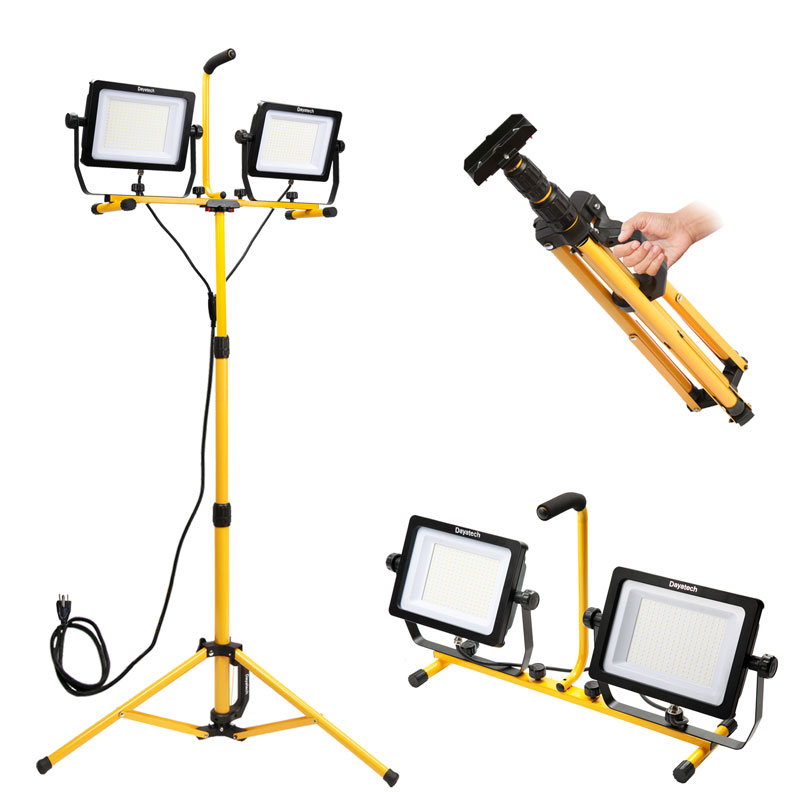
Table of Contents
- 1. What Key Parameters Define a High-Quality Portable LED Work Light?
- 2. Why Does Battery Life and Power Source Matter for Outdoor Projects?
- 3. How to Evaluate Durability and Weather Resistance for Jobsite Use?
- 4. What Are the Advantages of a Tripod LED Work Light Over Other Types?
- 5. How to Match Lumens and Beam Distance to Your Outdoor Task?
- Conclusion: Make the Smart Choice for Outdoor Efficiency
- Frequently Asked Questions (FAQ)
What Key Parameters Define a High-Quality Portable LED Work Light?
When selecting a portable LED work light for outdoor projects, focusing on technical specifications ensures you avoid dim, fragile, or short-lived products. At our factory, Ningbo Dayatech Technology Co., Ltd., we engineer lights that endure rigorous conditions. Below are the essential parameters you must examine before purchasing.
First, lumen output is the most quoted number, but it is not the whole story. Lumens measure total visible light emitted. For outdoor tasks such as foundation repair or roadwork, aim for 2000 to 10000 lumens. However, a light with 5000 lumens but poor beam focus might waste energy. Our Tripod LED Work Light series offers adjustable beam angles, allowing flood and spot modes. Second, color temperature (measured in Kelvin) affects visibility and eye strain. Cool white (5000K–6500K) mimics daylight, ideal for detail-oriented jobs. Warm white (3000K–4000K) reduces glare in dusty environments.
Third, power source flexibility distinguishes professional units. Look for rechargeable batteries plus AC/DC input. Our factory integrates high-capacity lithium-ion cells that support pass-through charging – meaning you can plug in while using the light. Fourth, IP (Ingress Protection) rating is non-negotiable for outdoor projects. IP65 means dust-tight and protected against low-pressure water jets; IP67 allows temporary immersion. Finally, consider material construction: die-cast aluminum housings with polycarbonate lenses outperform cheap plastic under vibration and heat.
Detailed Specification Table (Tripod LED Work Light Model DYT-1000P)
| Parameter | Value / Range | Outdoor Benefit |
| Lumens | 4000 / 8000 / 12000 (adjustable) | Adapts to small workshops or large construction zones |
| Color Temperature | 5000K (daylight white) / 3000K optional | Reduces eye fatigue for 8+ hour shifts |
| Battery Capacity | 15600mAh (Li-ion, swappable) | Runs up to 12 hours at 50% brightness |
| IP Rating | IP66 (dust-tight, powerful water jets) | Rain or dusty job sites – no failure |
| Impact Resistance | IK08 (5 joules impact) | Survives drops from 1.5 meters |
| Adjustable Tripod Height | 0.9m – 2.4m | 360-degree coverage for uneven terrain |
| Charging Ports | USB-C (fast charge) + AC outlet | Charge phones or small tools on site |
Our factory, Dayatech, ensures every unit meets these specs through rigorous testing. Beyond the table, look for certifications like CE, RoHS, and FCC – these guarantee safety and electromagnetic compatibility. Also, check the LED chip brand: CREE or Samsung LEDs deliver higher efficacy (lumens per watt) and longer lifespan (50000+ hours). Avoid uncertified lights that overheat or flicker, as they pose fire risks in outdoor environments.
Another hidden parameter is thermal management. A quality portable LED work light uses passive cooling fins or fans to prevent lumen depreciation. In our Tripod LED Work Light, the aluminum housing doubles as a heatsink, keeping junction temperatures below 85°C even at 10000 lumens. Always ask for datasheets that show temperature versus runtime curves. By mastering these parameters, you secure a tool that enhances productivity rather than failing mid-project.
Why Does Battery Life and Power Source Matter for Outdoor Projects?
Outdoor job sites rarely have convenient power outlets. Extension cords create tripping hazards and limit mobility. That is why battery life and power versatility are critical when choosing a portable LED work light. Our factory integrates smart battery management systems that maximize runtime without sacrificing brightness. Let us explore why this factor often makes or breaks a project.
Consider a bridge repair at night: you might need consistent light for 6 to 10 hours. A light with a small 2000mAh battery will die in 2 hours at full power, forcing you to stop work. In contrast, our Tripod LED Work Light packs a 15600mAh lithium-ion pack, delivering 8 hours at 4000 lumens. But capacity alone is insufficient – you also need battery chemistry. LiFePO4 batteries offer 2000+ cycles but are heavier; standard Li-ion balances weight and runtime. Our factory prefers high-density Li-ion with overcharge and over-discharge protection.
Another aspect is hot-swappable batteries. For ongoing outdoor projects, swapping a depleted battery with a charged one eliminates downtime. Many premium models include dual battery slots. We designed our Tripod LED Work Light with a quick-release battery compartment, so you can carry spares. Additionally, check for battery level indicators – LED bars or digital displays help you plan recharges. Without them, you are left guessing when the light will fail.
Power Source Comparison: Rechargeable vs. Corded vs. Hybrid
- Pure Rechargeable: Maximum portability, zero cords. Best for remote areas. Downside: limited runtime unless you have extra batteries. Our factory recommends for camping or short-term tasks.
- Corded (AC only): Unlimited runtime but requires generator or outlet. Not ideal for mobile outdoor projects unless paired with a long extension.
- Hybrid (Rechargeable + AC/DC input): The smartest choice. Use battery when moving, plug into a vehicle’s 12V outlet or wall socket during breaks. Our Tripod LED Work Light offers hybrid functionality, plus USB-C Power Delivery for fast top-ups from power banks.
At Ningbo Dayatech Technology Co., Ltd., we have observed that hybrid lights reduce total cost of ownership. You never waste money on disposable batteries, and you adapt to any power scenario. Also, consider charging time. A dead 15000mAh battery should recharge within 5–6 hours via 2A input; faster with PD 45W. Some models provide a 5V/2A USB output to charge smartphones – a lifesaver when your phone is your communication lifeline on remote sites. In short, prioritize a portable LED work light with at least 10000mAh capacity, hybrid inputs, and visible battery gauge. Your outdoor workflow will thank you.
How to Evaluate Durability and Weather Resistance for Jobsite Use?
Outdoor projects expose work lights to rain, dust, mud, vibration, and accidental drops. A fragile light becomes an expensive paperweight after one storm. Therefore, evaluating durability and weather resistance is not optional – it is essential. Drawing from our factory’s experience at Ningbo Dayatech Technology Co., Ltd., we follow a five-step checklist to certify ruggedness.
Start with the IP rating. IP stands for Ingress Protection, with two digits: first for solids (0-6), second for liquids (0-9). For outdoor projects, never accept below IP65. IP64 only resists splashes but not dust. IP66 withstands powerful water jets, while IP67 can be submerged 1 meter for 30 minutes. Our Tripod LED Work Light meets IP66, meaning you can pressure wash it after a muddy day. IP68 is overkill for most but useful for marine environments.
Second, impact resistance is marked by IK rating (0-10). IK07 resists 2 joules (roughly a 0.5kg hammer dropped from 0.4m). Our light achieves IK08 (5 joules), handling falls from truck beds. Third, housing material: aluminum alloy dissipates heat and resists corrosion better than ABS plastic. Rubber corner bumpers add shock absorption. Fourth, lens material: polycarbonate is virtually unbreakable compared to glass. We reinforce all lenses with a scratch-resistant coating.
Fifth, environmental seals: all buttons, USB covers, and battery compartments should have silicone gaskets. Our factory applies double-sealed O-rings on each opening. Also, request a datasheet for operating temperature range. A high-quality portable LED work light functions from -20°C to +50°C. Below freezing, battery chemistry struggles; look for low-temperature protection circuits.
Below is a durability quick-reference list for outdoor conditions:
- Minimum IP65 for dust and rain resistance
- IK07 or higher for drops and bumps
- Die-cast aluminum + rubberized corners
- Polycarbonate lens (not acrylic or glass)
- Sealed charging ports with flaps
- Salt spray test passed (≥ 48 hours) – critical for coastal projects
We also perform vibration tests to simulate transport on rough terrain. Our Tripod LED Work Light endures 5G vibration for 8 hours without loosening screws or flickering. Without such durability, your light may fail precisely when you need it most. Always check for warranty terms – a two-year warranty on a work light indicates confidence. At Ningbo Dayatech Technology Co., Ltd., our portable LED work lights come with three-year limited warranty because we know they survive real-world abuse.
What Are the Advantages of a Tripod LED Work Light Over Other Types?
When lighting large outdoor areas, a handheld flashlight or magnetic floodlight cannot match the coverage and stability of a Tripod LED Work Light. Our factory specializes in tripod-based designs that elevate the light source, reduce shadows, and provide 360-degree adjustability. Let us detail why this form factor dominates professional construction, event setup, and emergency response.
First, height adjustability eliminates glare at eye level. A tripod extends from 0.9 to 2.4 meters, casting light downward like a mini sun. This reduces blinding reflections from wet surfaces or tools. Second, stability on uneven ground: tripod legs have independent adjustment and rubber feet, preventing tip-over on gravel or grass. Our Tripod LED Work Light includes sandbag hooks for added weight in windy conditions. Third, beam coverage: multiple LED heads (often 2 or 3 panels) can rotate independently, allowing you to focus on different zones simultaneously.
Compared to magnetic or clamp lights, tripod versions do not require metal surfaces. Compared to wall-mounted lights, they are fully portable and fold into a compact carry bag. Moreover, a tripod design elevates the light above obstacles like vehicles or stacks of lumber, producing uniform illumination without hot spots. For outdoor projects like painting a large facade or setting up night markets, tripod lights are unmatched.
Additional advantages include:
- Integrated cable management: cords wrap around tripod legs to avoid tangles.
- Tool-less assembly: telescopic poles with twist locks.
- Multi-purpose head: some models offer detachable flashlight heads from the tripod, giving you both handheld and fixed options.
- Higher lumen density: tripod lights can accommodate larger battery packs and more LEDs due to increased surface area.
Our factory, Dayatech, has refined the Tripod LED Work Light to include a smart sensor that dims when you walk underneath, saving energy. We also offer a version with a built-in 360-degree rotating yoke, so you can aim light precisely without moving the entire stand. For outdoor projects spanning multiple days, a tripod light reduces setup time – just unfold, extend, and lock. In contrast, clamping lights require searching for attachment points, and area lights on the ground create long shadows. By choosing a tripod-based portable LED work light, you invest in professional-grade efficiency and safety.
How to Match Lumens and Beam Distance to Your Outdoor Task?
Mismatching lumen output and beam distance leads to either blinding over-illumination or dim, dangerous work conditions. Many buyers simply look for the highest lumen number, but outdoor projects require strategic balance. Through our factory's testing (Ningbo Dayatech Technology Co., Ltd.), we provide a task-based guide to help you select the perfect portable LED work light.
Lumens indicate total light output, but beam distance (measured in meters at 0.25 lux or 0.5 lux) tells you how far the light reaches. A wide flood beam (like 120 degrees) spreads lumens across a short distance, ideal for campsites or general area lighting. A narrow spot beam (15-30 degrees) concentrates lumens for long throw, useful for inspecting poles or rooftops. Many Tripod LED Work Light models include adjustable beam optics: twist the head to switch between flood and spot.
Here is a practical matching breakdown based on common outdoor tasks:
- Task: Emergency roadside repair (5-10 meters coverage) → 2000–4000 lumens, wide flood. Our Tripod LED Work Light at 4000 lumens covers two lanes.
- Task: Construction site foundation work (15-25 meters area) → 6000–10000 lumens, adjustable beam with tripod elevation to minimize shadows.
- Task: Camping or barbecue area (5-8 meters ambiance) → 1000-2000 lumens, warm color temp (3000K) to avoid harshness.
- Task: Search and rescue / long-distance inspection (over 50 meters) → Focus on spot beam with 5000+ lumens and beam distance >200 meters; some portable lights offer laser-like focus.
- Task: Painting or staining a fence (10 meters linear) → 3000–5000 lumens with high CRI (>80) to see true colors.
We also recommend considering luminous efficacy (lm/W). A cheap LED might produce 80 lm/W, while premium chips from our factory achieve 140 lm/W. Higher efficacy means less heat and longer runtime. For outdoor projects lasting all night, efficacy matters more than peak lumens. Ask for the lumens at 3 hours runtime – many lights drop 40% after thermal throttling. Our Tripod LED Work Light maintains 90% output due to active cooling fins. Lastly, color rendering index (CRI) above 80 reduces eye strain and helps distinguish wires or hazards. For professional electrical or mechanical work, CRI 90+ is ideal. By matching these metrics to your specific project, you get a portable LED work light that performs exactly as needed, without wasting battery or money.
Conclusion: Make the Smart Choice for Outdoor Efficiency
Selecting the right portable LED work light for outdoor projects boils down to analyzing lumens, battery flexibility, durability, form factor, and beam characteristics. Throughout this guide, we have emphasized practical specifications from our factory’s engineering perspective. A Tripod LED Work Light often provides the best balance of height, stability, and coverage for professional job sites. Remember to check IP ratings, impact protection, and hybrid power options – these features separate reliable tools from disposable lights.
At Ningbo Dayatech Technology Co., Ltd., we design and manufacture portable LED work lights that survive real-world outdoor abuse. Our Tripod LED Work Light series delivers up to 12000 lumens, IP66 waterproofing, and swappable batteries, ensuring your project never stops due to darkness. Whether you are a contractor, emergency responder, or dedicated DIY enthusiast, investing in a high-quality work light boosts safety and productivity.
Ready to upgrade your outdoor lighting? Contact Ningbo Dayatech Technology Co., Ltd. today for bulk inquiries, customized solutions, or to request a sample of our Tripod LED Work Light. Visit our official website to explore our full range of portable LED work lights, and let our factory experts help you choose the perfect model for your toughest projects. Light the way to efficiency – reach out now for a quote and free consultation.
Frequently Asked Questions (FAQ)
Q1: What lumen output is best for outdoor construction projects at night?
A1: For most outdoor construction tasks like framing, excavation, or concrete pouring, a portable LED work light should deliver between 6000 and 10000 lumens. This range provides sufficient brightness to cover a 20x20 meter area while reducing shadows. If you are working on detailed electrical or finishing tasks, opt for 8000+ lumens with a high CRI (Color Rendering Index) of at least 85. For smaller landscaping or fence repair, 3000-5000 lumens suffice. Always consider beam angle: adjustable flood/spot lights like our Tripod LED Work Light let you concentrate lumens where needed most. In cloudy or rainy nights, higher lumens compensate for reduced reflective surfaces.
Q2: How long does a rechargeable portable LED work light last on a single charge?
A2: Runtime depends on battery capacity (mAh), lumen output level, and LED efficiency. A typical high-quality portable LED work light with a 10000mAh to 15600mAh battery runs 6 to 12 hours at medium brightness (approx 4000 lumens). At maximum output (8000+ lumens), runtime may drop to 3–5 hours. Our Tripod LED Work Light with 15600mAh battery provides 10 hours at 50% brightness (4000 lumens) and 4.5 hours at 100% (12000 lumens). Hybrid models allow continuous use while plugged into AC or a car’s 12V outlet, essentially unlimited runtime. Always check if the light has a battery level indicator to avoid sudden shutdowns. For extended outdoor projects, choose a model with swappable batteries so you can carry spares.
Q3: Is an IP65 rating sufficient for heavy rain and dusty job sites?
A3: Yes, IP65 is considered fully protected against dust ingress (6) and low-pressure water jets from any direction (5). It withstands heavy rain, splashing, and even pressure washing from a distance. However, if you anticipate temporary immersion in puddles or muddy water (e.g., flood cleanup), choose IP67 or IP68. For most outdoor projects like roadwork, roofing, or landscaping, IP65 is the industry standard. Our Tripod LED Work Light meets IP66, which adds protection against powerful water jets (stronger than rain). Avoid IP64 or lower because dust alone can destroy moving parts and LED drivers. Always verify that all ports (USB, charging) are covered by rubber seals before exposure.
Q4: Can I use a Tripod LED Work Light on uneven or soft ground without tipping over?
A4: Absolutely. High-quality Tripod LED Work Lights feature independently adjustable legs that conform to slopes, stairs, or gravel. For soft ground like sand or mud, the feet should have wide rubber pads or spike tips. Our factory adds sandbag hooks to the central column, allowing you to hang a heavy bag for extra stability in windy conditions. Moreover, tripod designs have a low center of gravity when the legs are spread. To further prevent tipping, never extend the mast fully without widening the legs. Many models also include a stabilizer brace between legs. For extremely uneven terrain like rocky hillsides, use guy ropes attached to the tripod head. With proper setup, a tripod light is far more stable than a floor-standing work light.
Q5: What is the difference between warm white and cool white LED work lights for outdoor tasks?
A5: Color temperature directly affects visibility and fatigue. Cool white (5000K–6500K) mimics natural daylight, offering high contrast and reducing eye strain during detailed tasks like reading blueprints, wiring, or painting. It is ideal for most construction and repair jobs because colors appear true. Warm white (2700K–3500K) emits a yellowish hue similar to incandescent bulbs; it penetrates dust and fog slightly better but lowers perceived brightness. Warm white is preferred for campsites or outdoor social events because it feels softer and attracts fewer insects. Our recommendation: For professional outdoor projects requiring precision, choose cool white. For ambient lighting or foggy conditions, select a portable LED work light with adjustable color temperature (our Tripod LED Work Light offers both options via switchable LED boards).
Send Inquiry


X
We use cookies to offer you a better browsing experience, analyze site traffic and personalize content. By using this site, you agree to our use of cookies.
Privacy Policy